We've worked inside the finances of hundreds of small businesses. The pattern is almost always the same: a profitable owner who's frustrated, reactive, and exhausted, with a bookkeeper who's doing everything right.
That's the thing nobody tells you. You don't outgrow your bookkeeper because they're bad at their job. You outgrow them because the job itself has a ceiling. Here are the five signs you've hit it.
Sign #1: Your reports are accurate, but they don't answer anything
You get a P&L every month. The numbers are clean. And you still can't answer the question that actually matters: Can I afford to hire someone?
That's not a reporting failure. That's a scope failure. Good bookkeeping services are backward-looking by design, capturing what happened. They don't tell you what's coming, what's safe, or what to do next.
The business impact: Owners who rely on historical reports alone make decisions on gut feel. That works until it doesn't, and when it doesn't, the consequences are expensive. A hiring decision made without a cash flow forecast can create a payroll problem three months later that a simple model would have caught.
Picture a service business doing $800K a year. The books are spotless. But the owner is still checking the bank balance before every vendor payment, because no one has ever built them a forward-looking view of what's coming in and going out.
Sign #2: Cash flow keeps surprising you
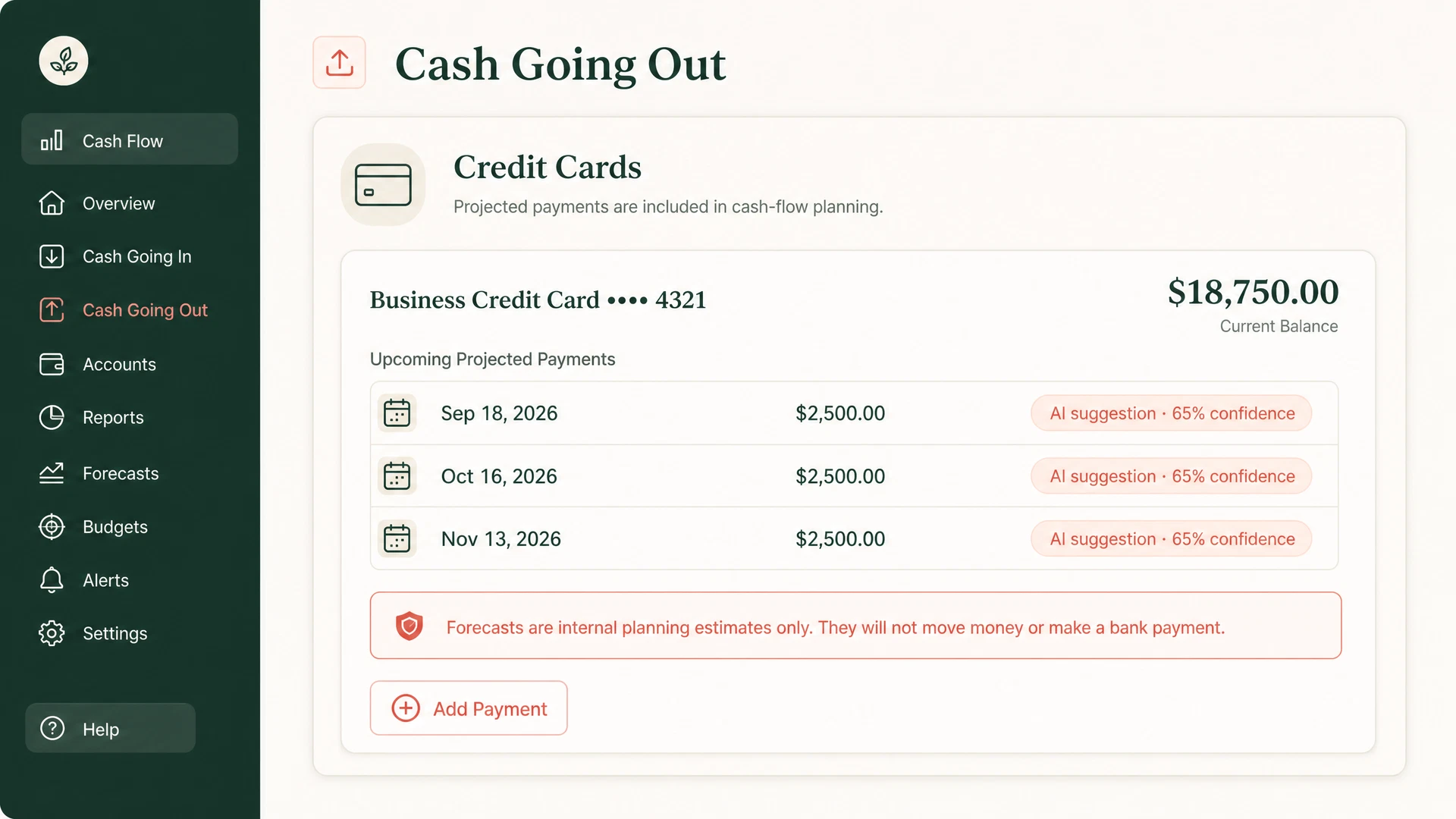
Revenue is up. You had a great quarter. And somehow, you're still scrambling to cover payroll in October.
This is one of the most common signs you've outgrown your bookkeeper, and one of the most misdiagnosed. Owners assume it's a revenue problem. It's almost never a revenue problem. It's a timing and visibility problem.
The business impact: Cash surprises don't just create stress, they force reactive decisions. You delay a vendor payment, skip a tax deposit, or pull from a line of credit at 8% interest to cover a gap that better forecasting would have prevented entirely.
A business owner lands a $60K contract in Q3 and feels flush. But the client pays net-60, payroll runs bi-weekly, and Q4 estimated taxes are due in October. Without a cash flow forecast, that $60K win quietly creates a $22K crunch, and the owner doesn't see it until it's already a problem.
Sign #3: You're making major decisions without real numbers
Thinking about adding a second location? Bringing on a full-time employee? Dropping a service line that feels unprofitable?
If you're making those calls based on instinct, or waiting until after tax season to get a clear picture, you've outgrown your bookkeeper. These aren't bookkeeping questions. They're strategic financial questions, and they require a different kind of support.
The business impact: Decisions made without margin analysis, scenario modeling, or cash flow projections carry real risk. Underpricing a service line by 12% doesn't show up in clean books, it shows up in a business that's busy but not building anything.
One of the clearest signs you've outgrown your bank, and your bookkeeper, is when you're making six-figure decisions by checking your account balance instead of running a model.
Sign #4: Tax season is still a scramble
If you're handing your CPA a shoebox of receipts in March, or if your tax bill surprises you every April, your financial system has a gap. A good bookkeeper keeps your records clean. But clean records and tax readiness aren't the same thing.
Tax readiness means your estimated payments are current, your owner compensation is structured correctly, and your preparer gets organized records, not a cleanup project.
The business impact: Scrambling at tax time isn't just stressful, it's expensive. Underpaid estimates trigger IRS penalties. Disorganized records mean your CPA bills more hours. And a surprise tax bill in April can wipe out the cash reserve you spent six months building.
A business owner who's been profitable for three years in a row still gets blindsided by a $14K tax bill every spring, because no one has ever set up a tax reserve system or coordinated their owner pay strategy with their filing.
Sign #5: You can't clearly explain your own financial position
If a banker, a partner, or an investor asked you right now, "What are your margins? What's your runway? What does your cash flow look like for the next 90 days?" could you answer?
If the honest answer is "I'd have to ask my bookkeeper and get back to you," that's the sign. Not because you're bad at business. Because you've never had a financial partner who translates the numbers into language you can actually use and act on.
The business impact: Inability to articulate your financial position costs you deals, loans, and credibility. Lenders and partners read financial uncertainty as operational risk, even when the underlying business is solid.
A business owner applies for an SBA loan and gets asked for a 12-month cash flow projection. Their bookkeeper has never built one. The application stalls for six weeks while the owner tries to piece one together in a spreadsheet.
What comes after a bookkeeper?
Here's the honest answer to the bookkeeper vs CFO question: bookkeeping is the foundation, not the ceiling. You still need it. You always will. But at some point, the foundation needs a structure built on top of it.
That's what a fractional CFO does. Not a full-time hire at $200K a year, a part-time financial partner who brings CFO-level thinking to your specific business, at a cost that actually makes sense for where you are.
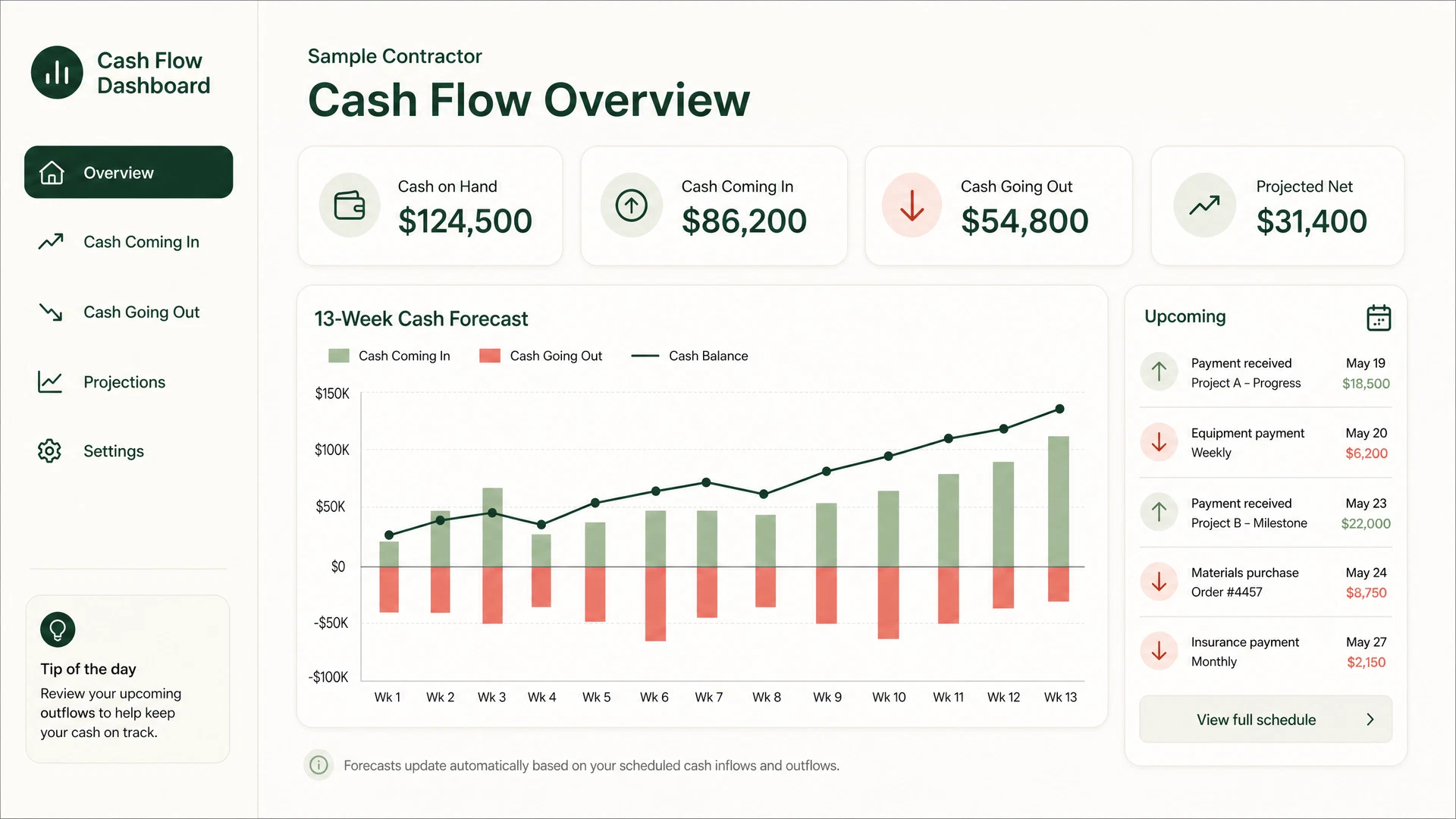
At 1610 Consulting, that looks like Profit OS, a 12-week engagement that builds the financial operating system your CPA and bookkeeper never gave you. A live cash flow dashboard. A clear owner-pay number. An automated tax reserve. And a documented system that keeps running after the engagement ends.
It also looks like ongoing fractional CFO services, monthly financial reviews, forward-looking cash flow planning, owner compensation strategy, and a direct line to a financial partner who knows your business and shows up every month.
The difference isn't complexity. It's direction. Bookkeeping tells you where you've been. A fractional CFO helps you decide where you're going, and whether you can afford to get there.
We believe your business is worth more than reactive financial management. It's a calling worth stewarding well. That means building systems that give you clarity, not just compliance.
How to make the transition
The good news: you don't have to blow up what's already working.
Most owners who've outgrown their bookkeeper don't need to fire anyone. They need to add a layer, financial leadership on top of accurate record-keeping. Here's how to approach it:
1. Audit your current pain points. Which of the five signs above are showing up in your business right now? Be honest. If it's two or more, you're past the point where a better bookkeeper solves the problem.
2. Don't wait for a crisis. The businesses that get the most from fractional CFO support are the ones that engage before the cash flow emergency, the bad hire, or the tax surprise. The cost of waiting is almost always higher than the cost of acting.
3. Look for integration, not addition. The right financial partner doesn't replace your CPA or your bookkeeper, they coordinate with both. At 1610, we work directly alongside your tax preparer so your owner compensation strategy, your tax reserves, and your filing are all aligned year-round.
4. Start with a conversation. You don't need to know exactly what you need. You need to know what's not working. That's what a Financial Check-In is for.
If any of this sounds familiar, the profitable-but-frustrated feeling, the cash surprises, the decisions made without real numbers, book a free Financial Check-In. We'll look at where the gaps are and tell you honestly what would actually help.
Book Your Financial Check-InFrequently Asked Questions
What does it mean to outgrow your bookkeeper? It means your business has grown to a point where accurate records aren't enough. You need forward-looking cash flow visibility, owner compensation strategy, and financial decision support - things that fall outside the scope of bookkeeping.
What's the difference between a bookkeeper and a fractional CFO? A bookkeeper records and categorizes transactions. A fractional CFO interprets your numbers, builds forecasts, structures owner pay, coordinates with your tax preparer, and helps you make confident financial decisions. The bookkeeper vs CFO distinction isn't about quality - it's about function.
How do I know if I need a fractional CFO or just a better bookkeeper? If your books are accurate and you're still financially frustrated - cash surprises, unclear margins, reactive decisions - you need a fractional CFO. A better bookkeeper will give you cleaner records. A fractional CFO will give you a system.
Can I keep my current bookkeeper and add fractional CFO services? Yes, and that's often the right move. Bookkeeping is the foundation. Fractional CFO services build on top of it. The two roles are complementary, not competitive.
When is the right time to make this transition? Earlier than you think. Most owners wait until there's a crisis - a cash shortfall, a tax surprise, a bad hire. The right time is when you're profitable but still feel reactive. That's when a financial system makes the biggest difference.
Useful Sources
- IRS: Small Business and Self-Employed Tax Center — Official IRS guidance on estimated taxes, owner compensation, and compliance requirements for small business owners
- SCORE: Financial Management for Small Business — Free resource on cash flow planning, financial statements, and when to seek professional financial guidance
- Association of Certified Fraud Examiners: Report to the Nations — Data on internal fraud risk in small businesses with fewer than 100 employees
